
 Member login
Crop pollination
Getting the most out of managed hives
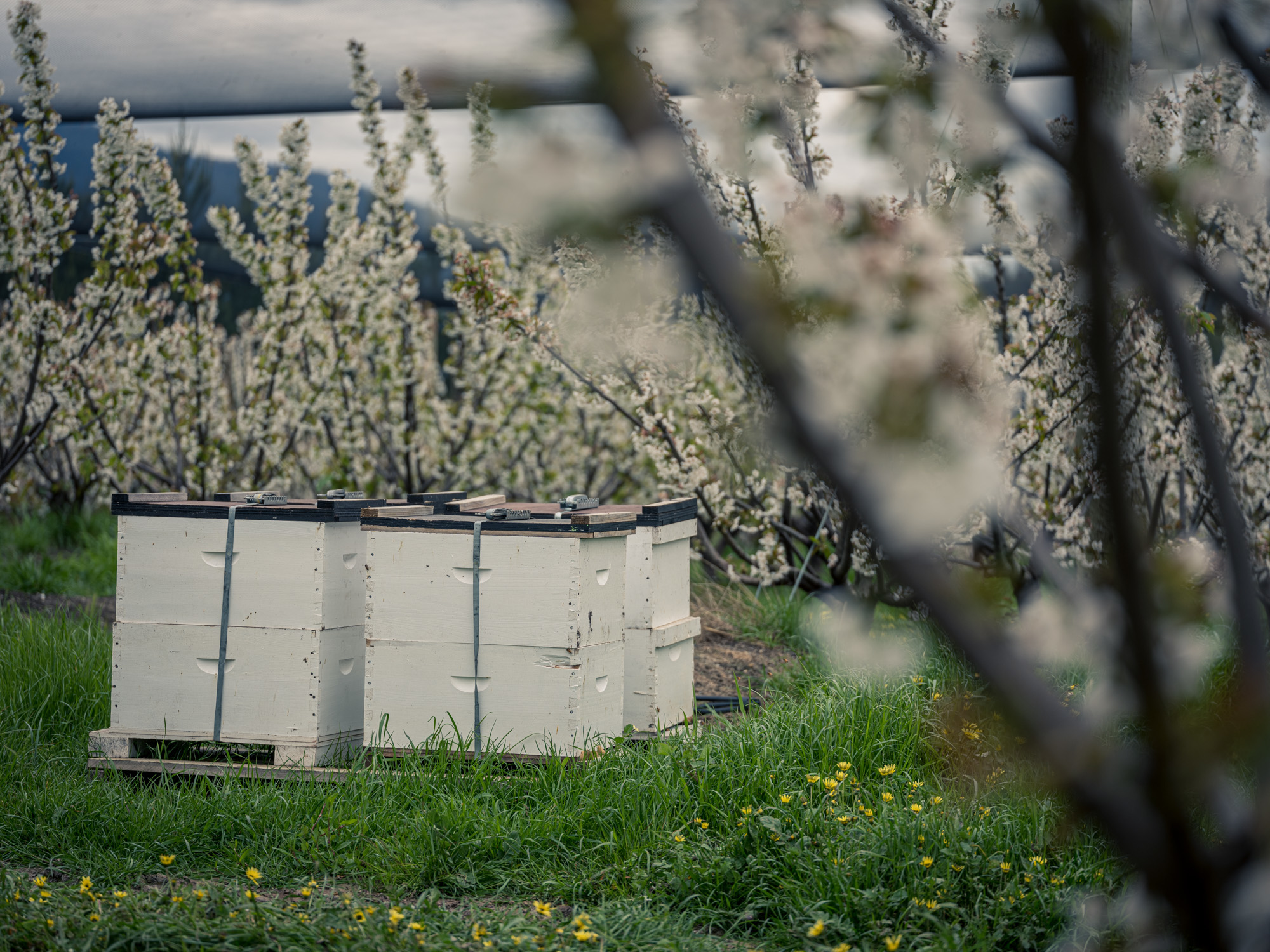
Commercially managed honeybee hives are the most common method for pollinating fruit crops in Tasmania. We asked Mick Palmer at Tasmanian Pollination Services what is good practice for both growers and pollination providers to get the most out of this operation. He responded with the following recommendations:
- With your pollination service provider, do a walk of the site a few weeks prior to pollination to determine how many hives will be needed, where they’ll be placed and how the beekeeper can access the site for delivery and hive maintenance.
- Discuss how and where the bees will have access to water. Better orchards will supply a water bucket with sponge floating so the bees can walk on the water and drink.
- Discuss sprays used and orchard management during pollination. Beekeepers prefer no sprays, so harsher chemicals should be done well before arrival of the bees or wait until after pollination, but they also understand an orchard may need a fungicide, so ensure you’re on the same page about what will happen while the bees are there.
- Tasmanian Pollination Services has purpose built loaders so discuss when you want the hives to arrive and if possible, provide a site map with the desired hive placement locations marked on the map.
- Only call in the bees after 10% flowering not when you see the first flower.
- The worst thing an orchard can do is call all the blocks in when the first one is ready. Calling the bees in when there aren’t any resources for them means that they will look elsewhere and will continue to go elsewhere even when you have flowers. To get the full impact from the bees on your pollination wait until you have at least 10% flowers, otherwise it is a lot of money to waste.
- At the other end of Pollination, beekeepers prefer to remove the hives with 10% of flowers left. If you leave calling the beekeeper until the very end of flowering the bees will suffer and you are not gaining more viable crop.
- Beekeepers will generally consider going back for small drops is more productive than leaving the bees in the crop without resources.
Cherry and apple pollination falls at the beginning of the pollination season and commercial pollinators may have two more pollination crops as well as honey to provide for in the 6 months available in Tasmania.
Feral honey bees, Varroa and pollination risk: what Tasmanian fruit growers should know
By Dr Jon Finch (TIA)
Tasmanian fruit growers currently benefit from both managed honey bee hives and background pollination from insects already present in the landscape. Background pollination may include feral honey bees, honey bees from nearby managed hives, bumblebees, flies and other insects.
A recently completed Tasmanian Institute of Agriculture (TIA) project investigated the extent to which Tasmanian fruit, berry and vegetable seed crops rely upon background pollination services. The work was conducted in response to the spread of Varroa mite on mainland Australia. The full report can be accessed here.
Bumblebees as commercial pollinators: risks and opportunities
Although bumblebees are now established across Tasmania, they still carry their original status as exotic environmental pests and so their use for commercial purposes is prohibited.
Unlike European honey bees, bumblebees are not susceptible to varroa mite, so their commercialisation for pollination services may be a valuable tool for fruit growers into the future.
At the 2025 Fruit Growers Tasmania industry conference, Dr Jon Finch, from the Tasmanian Institute of Agriculture, outlined the Hort Innovation Frontiers project on bumblebees as effective pollinators in Tasmania (PH23001).
Pollination Guide for the Australian Berry Industry
The Berries Australia Pollination Guide for the Australian Berry Industry 2024 is a best management practices guide for growers and pollination stakeholders in the berry industry. It provides guidance on how to establish and maintain clear communication between parts of your business and your beekeeper. It includes a detailed list of key conversations to have, roles and responsibilities.
It also includes templates for pollination agreements and letters to neighbours.
Access the guide here: Pollination Guide for the Australian Berry Industry
Pollination: unresolved questions
Dr Jon Finch, part of the team at the Tasmanian Institute of Agriculture (TIA) researching honeybee pollination and alternative pollinators, presented at the 2023 Fruit Growers Conference.
Jon highlighted the importance of combining pest and pollinator research (IPPM) rather than considering them as separate issues and instead manage them holistically.